Feature Profiles
9 January, 2026
SUMMER READING Nurse on the frontline
Joan Gibson's life caring and nursing
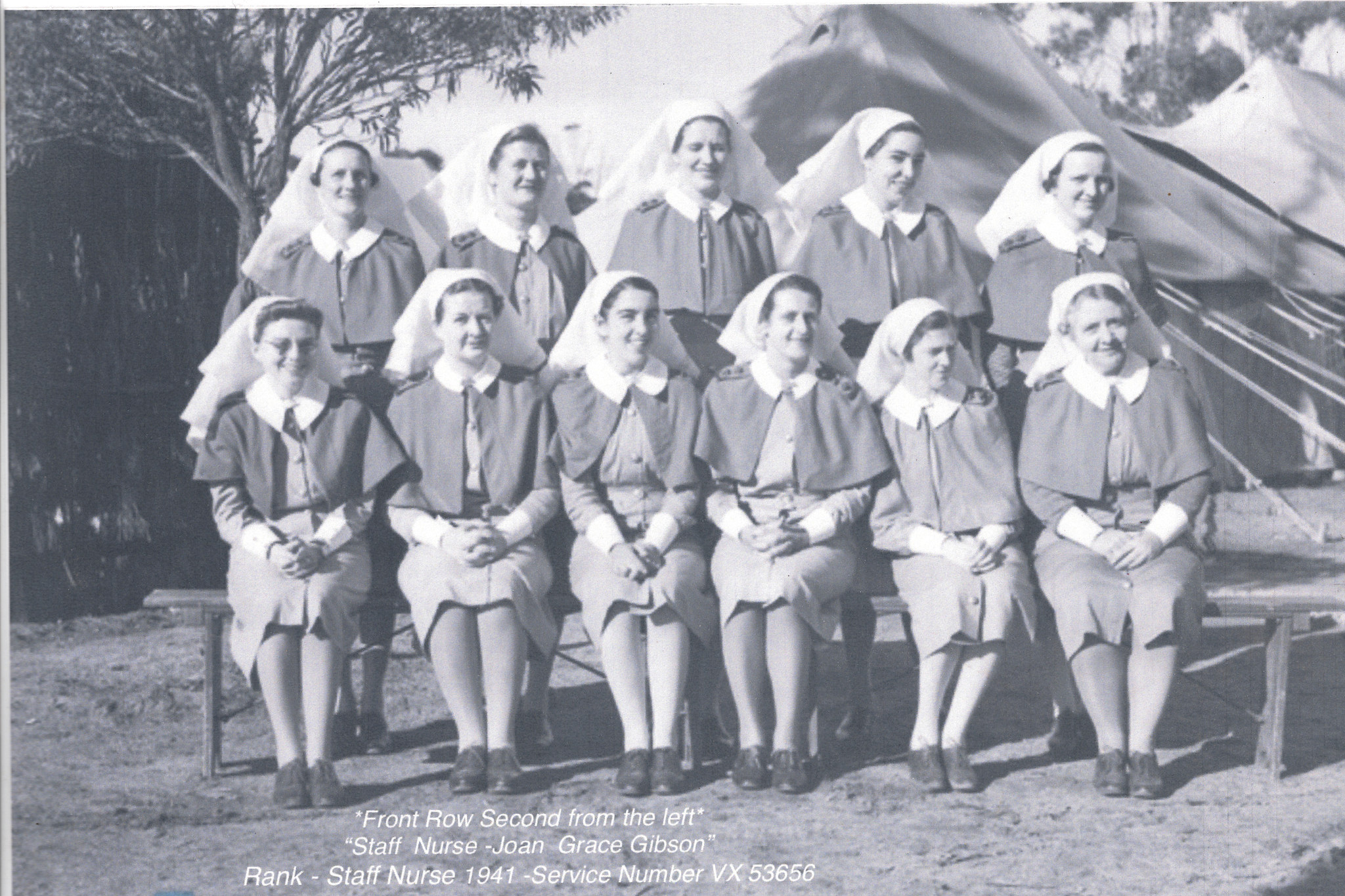
JOAN Gibson was among 5000 Australian women to serve in World War Two.
The former Bridgewater and Inglewood student who passed her nursing examinations while working at Echuca Hospital in 1938, would see service in the Middle East, the Pacific and at home in Australia.
Her record of service for Australia and care of soldiers injured on the frontline will finally be recognised in the district she grew up in when the A Grade netball most corageous player award in Saturday’s Anzac clash between Inglewood and Bridgewater takes her name.
After several years of research, the RSL sub-branch has chosen Joan for the recognition and creating a parallel for football’s Eddie Harrison Medal.
Joan would spend many decades as a nurse in public hospitals and in the Australian Army Nursing Service.
Born in Port Fairy, she told the Warrnambool sub-branch part of her story of service before passing away in the late 1980s, not long after 17 former Army nurses held a reunion in Port Lonsdale.
The retired Geelong Base Hospital charge nurse: “I was living in Prahran, when I enlisted in the Australian Army Nursing Service in Melbourne on August 20, 1940.
“I was posted directly to the 107th Australian General Hospital in Puckapunyal until the call came for me to embark overseas. I left for the Middle East in June 1941 to join the 1st Australian General Hospital until May of 1942.
“When I returned it was not long before I was posted overseas to the 2/1 Australian General Hospital in New Guinea. Following this posting I was home again for 6 months before I embarked for Bouganville in February 1945.
“My final posting at the 115 Military Hospital in Heidelberg. I had completed 999 days of active service in Australia and 858 days of active service overseas when I was discharged on July 26, 1946,” Joan said.
Local sub-branch member Glenn Catto tracked down members of Joan’s extended family as part of research.
“Joan was born in 1916 and moved with her parents Percy and Jean to a farm east of Bridgewater in the 1920s,” he said.
“The family told me that Joan and her brother Colin attended Bridgewater (State) School and Inglewood Higher Elementary School.”
Joan, like all nursing sisters in World War Two, was latter commission a lieutenant. Although, according to the Australian War Memorial, “many were loath to give up their traditional titles of sister and matron.” But, says the AWM, they were yet to be given the same status and pay as male officers.
Seventy-eight Australian nurses died in World War Two, most from enemy fire, or as prisoners of war. Joan Gibson, who grew up on the banks of the Loddon River was among those to return. From this weekend, the service of a local woman during the war will now be recognised.,
Read More: Inglewood