General News
12 January, 2023
High-tech road checks
World-first technology is being used to assess the condition of the Victoria’s flood-ravaged roads as part of the State Government’s emergency road repair blitz. Minister for Roads and Road Safety Melissa Horne said the Australian Road Research...
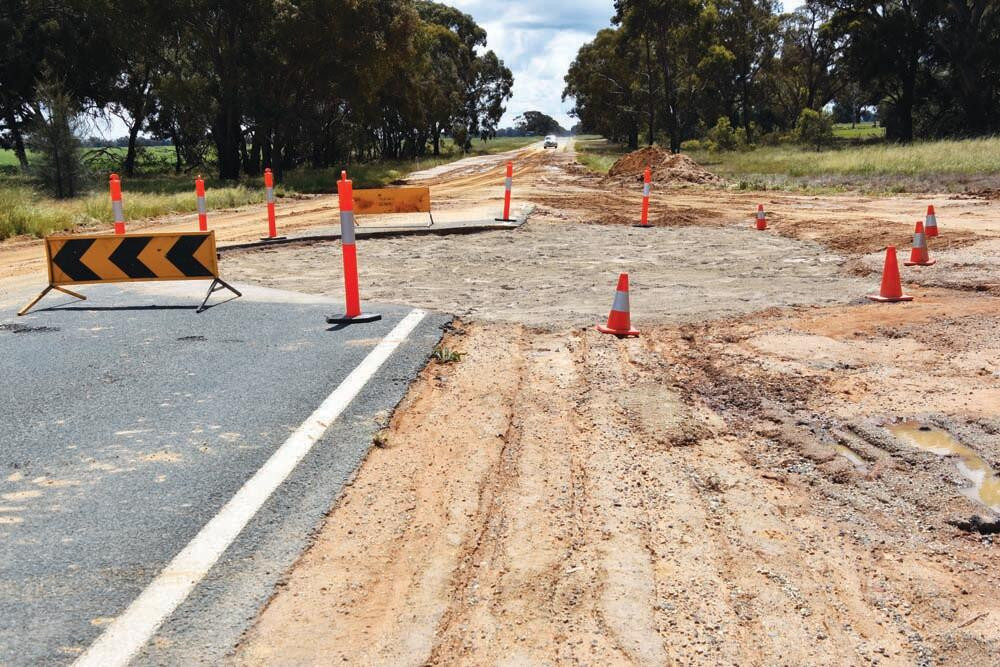
World-first technology is being used to assess the condition of the Victoria’s flood-ravaged roads as part of the State Government’s emergency road repair blitz.
Minister for Roads and Road Safety Melissa Horne said the Australian Road Research Board’s Intelligent Pavement Assessment Vehicle (iPAVe) will join the blitz, assessing the condition of more than 8400km of Victoria’s roads in the wake of recent floods and extreme rainfall, gathering a broad spectrum of data.
The announcement said:
The collected data will help plan for upcoming large-scale repairs and road maintenance across both regional and metropolitan Victoria.
Equipped with a range of data collection systems, iPAVe is capable of assessing both the structural and functional condition of the road, using laser technology developed in Denmark to look at characteristics including roughness, surface texture and rutting.
Cracking and other surface data is assessed using an automated 3D monitoring system, while cameras mounted to the truck’s exterior will give road maintenance experts a first-hand look at the state’s road network.
Thanks to an on-board ground-penetrating radar, the iPAVe can also collect sub-surface data at the same time, giving experts a better understanding of what’s happening underneath the road surface.
These datasets are collected at the same time, in one trip, at highway speed, making the iPAVe a cheaper, faster and safer way to collect intelligence.
Data collected as part of iPAVe’s most recent assessments will then be compared with similar information collected in 2021 to gauge the full impact of the recent floods.
More than 170 of the state’s roads will undergo inspection by iPAVe, including major freight and tourist routes like the Hume, Western, Midland, Goulburn Valley and Calder highways.
Thanks to the Labor Government’s $165 million emergency road repair blitz, larger-scale repairs are already underway on a range of roads right across the state, with more to come as warmer, drier weather delivers more suitable conditions for major roadworks.
Since mid-October, a team of more than 500 workers has repaired more than 116,000 potholes and delivered emergency repairs to re-open more than 930 roads – both local and state-managed roads.