Agriculture
29 October, 2025
Eco camp studies local wildlife
STUDENTS from Bendigo TAFE have been part of a three-day camp gaining hands-on experience in ecology, restoration and wildlife monitoring across the Loddon.
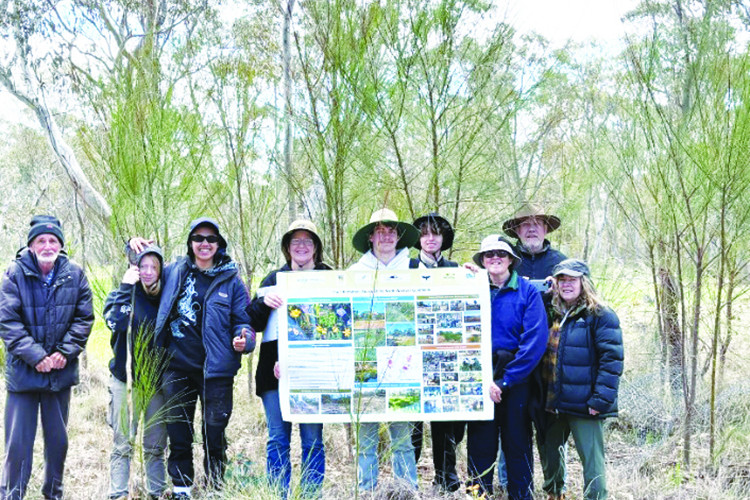
STUDENTS from Bendigo TAFE have been part of a three-day camp gaining hands-on experience in ecology, restoration and wildlife monitoring across the Loddon.
The field camp was co-ordinated by the Wedderburn Conservation Management Network and supported by Trust for Nature.
The camp was funded through a National Landcare Grant.
Network secretary Trudy Nelsson said the first day began at Kooyoora State Park, where ecologists Gary Cheers and James Nelsson guided students through the box–ironbark/Mallee ecosystems and the spring soaks area.
“They were discussing how groundwater, soil type, and seasonal moisture influence vegetation patterns,” she said.
“Students learned plant identification skills and examined the adaptations that enable species to survive in these transitional woodlands.
“The group then visited Bosisto’s, where students assisted with nest box monitoring as part of ongoing habitat restoration efforts.
“They also heard from Marcus Lea of Bosisto’s, who spoke about the company’s long-standing eucalyptus oil operations and the development of their new sustainable distillation facility.
“His presentation highlighted innovations in renewable energy, water efficiency, and responsible resource management.”
Camping near Mount Korong, the group investigated a nearby property, conducted bat monitoring, and took part in a spotlight walk to observe nocturnal wildlife.
“This provided students with practical experience in fauna survey methods and reinforced the importance of healthy habitat for native species,” Trudy said.
The final day saw students visit the Wychitella district, learning about threatened species and the landscape-scale efforts underway to support them.
“The group discussed species such as the Malleefowl, and how local conservation work — including habitat restoration and predator management — is helping to protect these vulnerable populations,” Trudy said,
Across the three days, students engaged in activities linking theory to practice, including:
Vegetation and habitat assessment in Box–Ironbark/Mallee transition zones
Wildlife monitoring using nest boxes, bat detectors, and spotlighting
Discussion of fire ecology, weeds, and land management pressures
Insights into sustainable industry and conservation partnerships
“The camp provided a rich, practical learning experience that deepened understanding of local ecosystems and the shared role of community, education, and industry in protecting them,” Trudy said. “It also strengthened collaboration between Bendigo TAFE, Trust for Nature, WCMN, Bosisto’s, and local ecologists, supporting the next generation of land managers and conservation professionals.”
Read More: Inglewood